

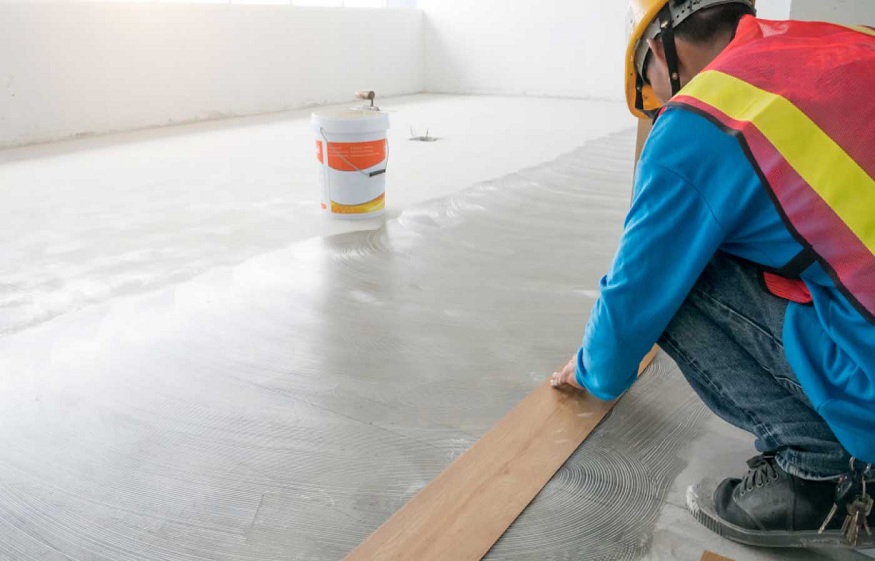
A vinyl floor can transform the appearance of a room, but its long-term performance depends on more than the quality of the flooring material. The adhesive, subfloor condition, installation technique, and surrounding environment all contribute to the finished result.
For contractors and homeowners planning renovation projects, understanding these factors before installation can help prevent loose edges, shifting planks, uneven surfaces, and costly repairs. Selecting the correct bonding product is therefore an important part of building a flooring system that performs reliably.
Understand the Flooring Material First
Vinyl flooring comes in several formats, including luxury vinyl plank (LVP), luxury vinyl tile (LVT), and vinyl composition tile (VCT). Although these products share some characteristics, their installation requirements can differ.
Some vinyl planks use floating click-lock systems and do not require adhesive across the entire floor. Others are specifically designed for glue-down installation.
Before purchasing an adhesive, check the flooring manufacturer’s installation instructions. These will identify whether the product requires a permanent bond, a pressure-sensitive adhesive, or another installation method.
Using an adhesive that is incompatible with the flooring can affect both the installation process and the finished floor.
Read More: Best Material For Wine Cellar Shelves and Racks
Why Adhesive Selection Matters
Adhesive does more than hold flooring in place. It helps maintain alignment, supports consistent contact with the substrate, and contributes to the stability of the finished surface.
For larger installations, working time is particularly important. Installers need enough flexibility to position planks or tiles accurately without allowing the adhesive to lose its effectiveness.
When comparing professional vinyl flooring glue, consider factors such as:
- Compatibility with the specific vinyl flooring material.
- Initial grab and final bond strength.
- Open time and working time.
- Application method and recommended trowel.
- Substrate compatibility.
- Cleanup requirements and indoor application conditions.
ROMAN’s PRO-690 Pressure Sensitive Flooring Adhesive is formulated for resilient flooring applications, including most LVP, LVT, and VCT products. It supports both wet-set and pressure-sensitive installation methods, depending on how it is applied and the manufacturer’s instructions.
Prepare the Subfloor Before Applying Adhesive
Even a high-quality adhesive cannot compensate for an unsuitable installation surface.
Subfloor preparation is one of the most important stages of a successful vinyl flooring project. Dust, grease, old adhesive residue, loose particles, and surface irregularities can interfere with proper bonding.
The substrate should be clean, dry, structurally sound, and sufficiently smooth for the selected flooring system.
Concrete surfaces require particular attention. Moisture testing and pH evaluation should be completed according to the flooring and adhesive manufacturers’ requirements. Excess moisture can compromise adhesive performance, even when the surface appears dry.
Any cracks, uneven areas, or surface defects should be addressed using appropriate preparation materials before installation begins.
Understand Pressure-Sensitive and Wet-Set Applications
Not all adhesive applications follow the same process.
With a wet-set installation, flooring is placed into adhesive while it is still wet. This approach can create a more permanent bond when the product and flooring specifications allow it.
Pressure-sensitive installation follows a different process. The adhesive is allowed to dry until it reaches a tacky state before the flooring is positioned. This can provide installers with additional flexibility when aligning individual planks or tiles.
PRO-690 supports both approaches, allowing installation methods to be selected according to project requirements and manufacturer guidance.
Understanding the difference helps installers plan their working sequence and avoid placing flooring outside the recommended adhesive window.
Consider the Environment Where Flooring Will Be Installed
Residential and commercial flooring projects can have very different demands.
A living room may experience regular foot traffic, furniture movement, and occasional spills. Retail spaces, offices, and multifamily buildings may experience heavier daily use and more frequent cleaning.
The adhesive should be selected according to the flooring specification and the intended environment.
Indoor air quality and application conditions also deserve attention. Water-based, low-odor formulations can be useful in occupied interior environments, provided they meet the requirements of the specific flooring system.
ROMAN describes PRO-690 as a water-based flooring adhesive with low odor and 0 g/L VOC, making its technical specifications worth reviewing for suitable residential and commercial applications.
Follow the Correct Application Technique
Once the surface is ready, consistency during application becomes essential.
Use the trowel type and notch size specified by the adhesive manufacturer. Applying too much or too little adhesive can interfere with proper contact and bonding.
Spread the product evenly over the recommended area rather than covering more floor than can be installed within the stated working time.
Installers should also follow the recommended rolling procedure, placement instructions, and traffic restrictions. Allowing the floor to develop the required bond before moving furniture or introducing heavy foot traffic can help prevent installation problems.
Always consult the product’s technical data sheet for application temperatures, coverage, drying conditions, and cleanup instructions.
Avoid Common Installation Mistakes
Several preventable errors can affect vinyl flooring performance:
- Skipping moisture testing on concrete substrates.
- Applying adhesive over dusty or contaminated surfaces.
- Using a product that is not approved for the flooring material.
- Ignoring recommended working times.
- Using an incorrect trowel.
- Allowing premature traffic before the adhesive has developed sufficient bond strength.
Paying attention to these details can improve installation consistency and reduce the likelihood of callbacks or repairs.
Conclusion
A successful vinyl flooring installation is the result of several decisions working together. The flooring material, adhesive, substrate preparation, and installation method must all be compatible.
ROMAN’s flooring adhesive collection includes PRO-690 Pressure Sensitive Flooring Adhesive, designed for a range of resilient flooring applications. Reviewing the product specifications and matching them to the flooring manufacturer’s requirements can help contractors and homeowners make a more informed selection.
Ultimately, a durable floor begins long before the first plank is placed. Careful preparation, appropriate adhesive selection, and consistent installation practices are what help create a finished surface that looks professional and performs reliably over time.